For the Type A Mama Learning to Let Go (Just a Little)

If you’re a Type A mother, you probably love order, routines, clean counters, and checking things off a list. You feel calmer when things are organized and predictable. You thrive when you have a plan.

And motherhood… lovingly wrecks that plan.

This season has been teaching me something uncomfortable but freeing: I don’t have to do everything perfectly to be doing something holy.

Some nights, I go to bed with dishes in the sink.

Not because I’m lazy—but because I’m tired.

Because my body needs rest more than my kitchen needs sparkle.

Some nap times, I don’t power through my to-do list. I sit. I breathe. I sleep. I read. I pray. I rest. And I remind myself that rest is not wasted time—it’s necessary fuel.

Some mornings, I’m still in my pajamas well past 10 a.m.

Because the kids needed breakfast, diapers, snuggles, redirection, playtime, naps, and patience more than I needed to “get myself together.”

And that’s okay.

There are messes left out while I sit on the floor playing. Toys scattered because laughter mattered more than tidiness in that moment. The schedule bends—sometimes breaks—because life with little ones is unpredictable. Yes, nap times and feeding schedules are helpful and grounding, but they are tools, not chains.

Motherhood has been teaching me gentleness—especially toward myself.

Grace when the list doesn’t get finished.

Grace when the house doesn’t look the way I want it to.

Grace when I feel behind, overwhelmed, or stretched thin.

Every morning, before my feet even hit the floor, I try to pray the same thing:

Lord, I can’t do today in my own strength. I need Yours.

Because motherhood is not about self-sufficiency—it’s about dependence on God.

Being a mother is an act of servanthood.

And servanthood is worship.

When I wake up for the 2 a.m. feedings.

When I get out of bed for the third time in one night.

When I put my children’s needs before my own comfort.

I remind myself: This is not unseen.

This is honoring God. This is glorifying Him. This is holy work.

I’m learning to find joy in the chaos, not despite it.

I’m also learning not to compare.

Not to other mothers.

Not to other families.

Not to curated moments or highlight reels.

Comparison steals joy—and I don’t want to give it that power.

Daily, I remind myself: I don’t have to be in control. God already is.

And when God is in control, I am freer.

I have more peace.

Because His outcomes are always better than mine.

That includes my children’s safety, their health, their hearts, and even their behavior. I don’t have all the answers—and I don’t need to. There are resources, wisdom, and tools available, and I choose to use them to lower my stress, to feel prepared, and to grow.

That’s the kind of control I can steward well:

Being informed.

Being prepared.

Being open to learning as each new season of motherhood brings new challenges and growth.

Motherhood is a constant renewing of the mind.

That’s why I cling to Scripture daily—letting it wash over my thoughts, my expectations, and my identity.

One of my favorite verses reminds me to focus on what truly matters:

“Whatever is true, whatever is noble, whatever is right, whatever is pure, whatever is lovely, whatever is admirable—if anything is excellent or praiseworthy—think about such things.” (Philippians 4:8)

Another reminds me that my thoughts don’t have to control me:

“Take every thought captive and make it obedient to Christ.” (2 Corinthians 10:5)

These truths ground me.

They free me.

They remind me that perfection was never the goal—presence was.

To the Type A mama learning to loosen her grip:

You are doing holy work.

You are allowed to rest.

You are allowed to let go.

And you are never doing this alone.

Daytime Potty Training Accidents: What Actually Helps

If you’re in the middle of potty training, let me start with this:

Accidents are normal.

They happen early and late in the potty-training process — even when things were going “great.”

If your toddler just had a daytime accident and you’re wondering what am I supposed to do right now? — this is for you.

This is what’s worked for us, and what’s consistently recommended by child-development experts.

First Things First: Accidents Happen

Potty training isn’t a straight line.

It’s common for children to:

• Have accidents while learning body signals

• Get distracted while playing

• Regress temporarily during growth spurts, illness, or routine changes

A daytime accident does not mean:

• You failed

• Your child isn’t ready

• You need to start over

It means your child is still learning — and learning happens through repetition, not shame.

Step 1: Clean Up First. Teaching Comes Later.

In the moment of an accident, your child is often:

– Embarrassed

– Overstimulated

– Uncomfortable

This is not the time for a lecture.

What helps most:

– Stay calm

– Use a neutral tone

– Focus on getting your child clean and comfortable

You might say something simple like:

“Oops, your body didn’t make it to the potty this time. Let’s get cleaned up.”

No scolding. No long explanations.

Just safety and calm.

This helps your child feel secure — which actually supports learning long-term.

Step 2: Avoid Shaming (Even Accidentally)

It’s tempting to say things like:

“Why didn’t you tell me?”

“You were doing so well!”

“Big kids don’t do this.”

Even well-meaning comments can create pressure.

Shame can make children:

– Hide accidents

– Resist the potty

– Feel anxious about body signals

Instead, keep your language factual and reassuring:

“Accidents happen. We’ll try again next time.”

Step 3: Teach After the Moment Has Passed

Once your child is calm and clean — that’s when gentle teaching helps.

Later on (even hours later), you can:

• Remind them where the potty is

• Practice sitting on the potty

•Talk about body cues in a relaxed way

Examples:

“Next time your tummy feels funny, that’s your body telling you it’s time.”

“We can always stop playing to use the potty.”

Short, calm reminders work better than repeated corrections.

Step 4: Look for Patterns (Without Overreacting)

If accidents are happening often, ask yourself:

• Are they happening during play?

• After meals?

• When leaving the house?

This helps you adjust — not pressure your child.

Simple changes can help:

• Offering potty breaks before transitions

• Dressing in easy-to-remove clothes

• Gently reminding instead of waiting for them to ask

Step 5: Encourage Progress, Not Perfection

Potty training is about confidence, not control.

Celebrate effort:

• Sitting on the potty

• Telling you afterward

• Trying again

You can say:

“You’re learning. I’m proud of you for trying.”

Children learn best when they feel safe — not when they feel rushed.

A Word to Parents

If you’re feeling frustrated or exhausted, you’re not alone.

Potty training can be messy — literally and emotionally.

But accidents are part of the process, not a step backward.

Take a breath.

Clean up.

Try again.

You’re doing better than you think.

Want more potty-training help?

I’m sharing real-life tips and what’s worked for our family over on Instagram and here on the blog.

You can find more resources linked in my bio.

🤍 Everyday Mama Tested

Potty Training Our Toddler: What Actually Worked for Us

Potty training can feel overwhelming, especially when you hear so many different opinions about when and how to do it. For us, it came down to research, consistency, patience, and choosing an approach we were willing to fully commit to.

I potty trained my toddler at 22 months old, before he turned two, using a three-day at-home approach. While every child is different, this method worked incredibly well for our family, and I want to share what that experience looked like for us.

Why We Started Early

I read a well known book about potty training your toddler in three days, and it was a quick, easy, and eye opening read. One thing that stood out to me was how much the average potty-training age has changed over time.

Historically, many children were potty trained closer to 18 months. Over the years, with the rise of disposable diapers and changes in culture, the “normal” age has shifted closer to three or even four years old. That didn’t feel like the right fit for our family, so we decided to start earlier.

Day One: Saying Goodbye to Diapers

On the morning we started potty training, we made it very clear to my toddler that diapers were done.

We grabbed a big garbage bag and walked through the house together, collecting diapers from every room. I explained to him:

“Diapers are for babies. You’re a big boy now, and big boys wear underwear and go potty on the toilet.”

He has a baby brother, so this distinction helped him understand the change. We even “threw” the diapers away together so he could visually process that they weren’t coming back. (I secretly saved them for the baby, but in his mind, they were gone.)

Underwear Only & Staying Home

For the first three days:

— He wore regular underwear only

— No pants, no shirt

— We stayed home the entire time

— No TV or screens

The underwear was important because it allowed him to feel accidents and connect that sensation with needing to go to the bathroom. Screens were too distracting, and going outside would have put him too far from the toilet.

I also made sure he drank lots of fluids throughout the day: water, diluted juice, and drinks he enjoys so he had frequent opportunities to practice.

Setting Up for Success

Before we started, I gathered a few key things:

A potty seat with built-in steps and handles (this made a huge difference)

— New, fun toys to keep him engaged indoors

— A sticker chart

— Small rewards for potty success (stickers and a clean chocolate candy)

— A few special toys reserved specifically as rewards for going poop on the toilet

— Books to read on the potty to promote relaxation

The rewards weren’t about pressure, they were about encouragement and excitement.

How We Handled Accidents

Accidents were expected, especially on day one. When they happened, I stayed calm.

If he started going potty somewhere else, I gently picked him up and took him straight to the toilet, saying:

“This is where we go potty.”

He helped clean up the mess, we changed into fresh underwear, and we moved on. No yelling. No shame. No frustration.

Staying calm was crucial. Toddlers feed off our emotions, and I wanted him to feel safe and confident while learning something new.

Finding a Natural Rhythm

Instead of forcing him to sit on the toilet every 15 minutes, I paid attention to his cues:

• Standing still

• Grabbing himself

• Hiding in his usual “poop spots”

When I knew it had been a while and he had been drinking a lot, I would gently invite him to try sitting on the potty. If he went — great. If not — no pressure.

Over time, he began learning:

• How to recognize the urge

• How to hold his bladder

• How to communicate when he needed to go

Sleep & Nighttime Potty Training

We used pull-ups for one nap and one night at the very beginning, but he didn’t have any accidents, so we stopped using them.

What helped most:

— Always going potty before bed

— Cutting off liquids a couple of hours before bedtime

Every family is different, this is just what worked for us.

Potty Training Outside the Home

Once we started leaving the house again, I brought a foldable travel potty seat in our diaper bag. It fits easily on public toilets and has been incredibly helpful for keeping consistency while out and about.

I also offer the opportunity to go potty before leaving the house and once we get to our destination.

When Accidents Happen Later On

Even after successful potty training, accidents still happen and that’s normal. Just redirect back to the bathroom as quickly as possible.

When they do, I ask:

— Was I distracted?

— Was there a change in routine?

— Were we traveling, sick, or emotionally off?

There’s usually a reason. Staying calm and consistent helps everyone move forward without stress.

Final Thoughts

Potty training doesn’t have to be perfect, it just needs consistency and remember you’re in charge, not your kiddo. If you wait for your kid to tell you when they’re ready you might be waiting a long time. What worked for us may not work for everyone, and that’s okay. The most important thing is choosing an approach you’re willing to stick with and creating a positive, pressure-free environment for your child.

Trust your instincts. You know your child best.

Why Sleep Routines Matter for Babies & Toddlers (and What’s Worked for Us)

Sleep routines definitely matter. From day one with both of my kids, I’ve found that establishing a sleep routine early is important for supporting good quality sleep.

That said, neither of my kids has been an “easy sleeper.” Sleep in our home has come with a lot of research, trial and error, time, effort, patience, and honestly, figuring out what we are willing and able to do as parents. Every child is different, and what works for one may not work for another.

What I have learned is that helping kids follow a consistent sleep routine allows them to understand where they’re at in the day and what to expect next. Mentally and physically, it helps their bodies prepare for sleep, which is especially important for toddlers as they learn to emotionally regulate at bedtime, and for babies so they can settle without becoming overtired or inconsolable.

Why Consistent Sleep Routines Are So Helpful

For both babies and toddlers, routines act as cues. Repeating the same steps each night helps signal:

• “The day is winding down.”

• “Sleep is coming next.”

For toddlers, this predictability can reduce bedtime resistance and power struggles because they know what’s coming. For babies, it often means less crying and an easier transition into sleep.

Consistency doesn’t mean perfection, it simply means doing the same general steps, in the same order, most nights.

Our Baby Sleep Routine

For our baby, bedtime usually looks like this:

After dinner, we start with a bath. We keep bath time calm but enjoyable, letting the warm water relax and soothe him.

After the bath:

• Diaper change

• Lotion and pajamas

• Sleep sack on

• Sound machine turned on

• Lights turned off

I’m still nursing 100%, so I feed him while rocking, shushing, and singing softly. Before laying him in the crib, I pray over him. This moment feels grounding and peaceful for both of us.

This routine helps him settle more easily and associate these steps with sleep.

Our Toddler Sleep Routine

Our toddler’s routine is similar, with a little more independence built in.

After dinner:

• Bath time (often together with the baby—they really enjoy this time)

• Teeth brushing (not always easy, but important!)

For teeth brushing, we:

• Rotate toothbrushes with characters he loves (e.g., Blippi, Bluey, Paw Patrol)

• Use a toddler electric toothbrush (because mom and dad have one!)

• Let him brush first, then we step in to finish the job

After that:

• He chooses his underwear and pajamas from a couple of options (this helps him feel in control)

• We say goodnight to everyone in the house

• He chooses which books to read and whether we read them in his bed or in the rocking chair

Before we start reading, I tell him how many books we’ll read so expectations are clear.

After books:

• We pray together

• He gets to choose whether he turns the sound machine and lights on/off, or if I do it

Depending on the night, he may fall asleep in the rocking chair and I transfer him to his floor bed, or we’ll fall asleep together in his bed. Either way works for us.

What Works for Our Family (and That’s Okay)

Some parents are comfortable putting their children down awake and letting them fall asleep independently. I haven’t found success with that approach—for either of my kids.

For us, both my baby and toddler are fully asleep in my arms before I leave the room. This may not be right for everyone, but it’s what works for our family right now—and that’s okay.

Nursery & Room Setup That Supports Sleep

Both of my kids’ rooms are set up with sleep in mind:

• Blackout curtains and blackout shades to block all light

• Sound machines in both rooms

• No nightlights (neither child is afraid of the dark yet)

• Clean rooms at bedtime for a calm environment

For the toddler, we also use a sound machine with a color-changing light. When the light turns green at 6 a.m., he knows it’s time to get out of bed. If he wakes and the light isn’t green, he knows it’s still sleep time.

Sleep safety is important to us:

• Baby sleeps only in a sleep sack—no loose items

• Toddler sleeps with a couple of low pillows and a blanket or two

Consistency Over Perfection

Even on nights when I feel exhausted or think a bath “isn’t necessary,” I still do a quick one. Not because it has to be perfect—but because it signals bedtime. That consistency matters.

Kids thrive on predictability. Just like adults, when we have consistency, we feel more stable—and that stability is especially important around sleep.

Bedtime can be hard because kids want to stay up. A steady routine helps take the guesswork out of it for them.

Final Thoughts

Every child is different. Every family is different. Sleep routines don’t have to look the same to be effective.

The most important thing is finding a rhythm that works for your family and sticking with it as best you can. Consistency matters far more than doing everything “by the book.”

Toddler Independence at Home: What’s Worked for Us

One of the biggest shifts I’ve experienced as a mom is realizing how capable toddlers actually are. While it can feel easier (and faster) to do things for them, I’ve found that creating small opportunities for independence has made our days smoother and has helped my toddler grow in confidence.

Here are a few simple ways we’ve encouraged independence at home and what’s genuinely worked for our family.


Encouraging independence by letting my toddler help unload and organize groceries in his own way.

Creating Safe Opportunities to Help

Toddlers naturally want to be involved in whatever we’re doing. Instead of pushing that curiosity aside, I’ve learned to lean into it safely. Whether it’s helping in the kitchen, washing hands, going potty, or standing at the counter during daily routines, giving them a place where they feel secure makes a big difference.

When toddlers can see what’s happening and participate at “grown-up height,” they feel included rather than redirected.

Encouraging Choice (Within Boundaries)

Independence doesn’t mean unlimited freedom, it means guided choice. We keep things simple:

• Choosing between two outfits

• Picking a book to read

• Deciding where to sit for a meal

These small decisions give toddlers a sense of control without overwhelming them.

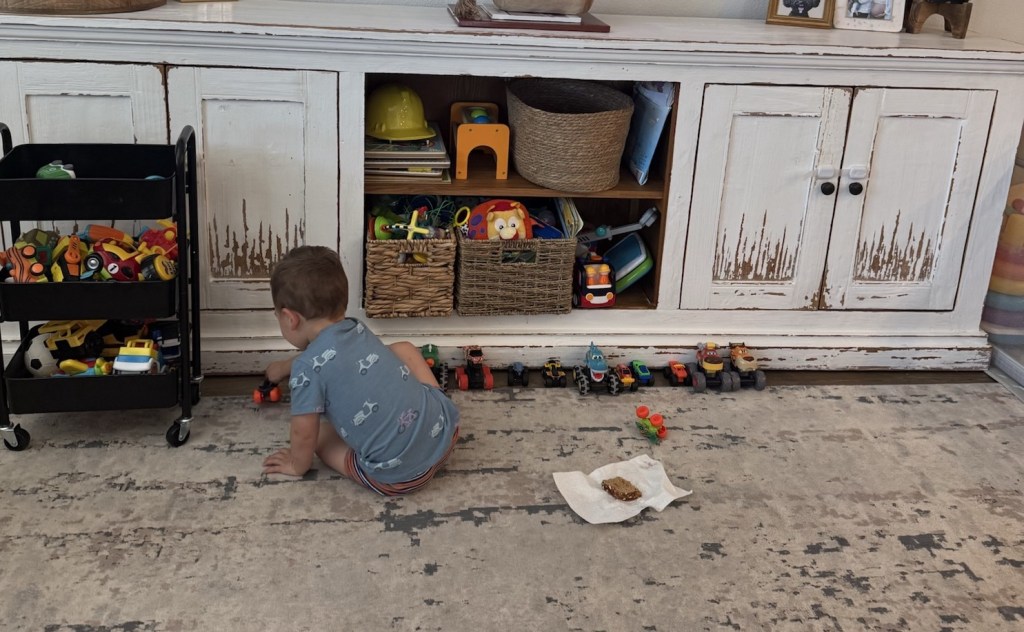
Easy access to toys on open shelves, plus a rolling organizer for his toy cars that he loves moving around the house.

Making the Home Toddler-Friendly

When spaces are set up with toddlers in mind, they’re naturally more independent. Some things that have helped us:

• Books placed low so they can choose on their own

• Step stools or accessible sinks for handwashing

• Simple organization so toys are easy to put away

• An easy to use potty seat to get on and off the toilet without help

This has reduced frustration and encouraged responsibility.

Letting Them Try (Even When It Takes Longer)

This one can be hard, especially on busy days, but letting toddlers try things themselves, even when it’s slower or messier, builds confidence and their self esteem. Whether it’s climbing, pouring, or cleaning up, the pride they feel afterward is worth the extra time.

I’ve noticed fewer power struggles when my toddler feels trusted and capable.

Independence Builds Confidence

What I’ve learned most is that independence isn’t about rushing kids to grow up, it’s about giving them age-appropriate opportunities to succeed. When toddlers feel confident in their abilities, they’re often calmer, happier, and more cooperative.

For our family, fostering independence has brought more peace into our home and has helped my toddler feel empowered in everyday life.

Huglock Door Lock Review: A Simple Toddler Lock That Actually Works

Disclosure: As an Amazon Associate, I earn from qualifying purchases.

As a mama of two young boys, childproofing has become a daily part of life in our home. Once toddlers realize doors open, nothing feels off-limits anymore — bedrooms, bathrooms, closets, and everything in between.

I recently started using the Huglock snap-on door lock, and after using it in our home, I knew I needed to share an honest review for other parents considering what’s best for them.


Installed Huglock door lock in our https://amzn.to/4jODIP8home

What Is the Huglock Door Lock?

According to the Amazon listing, the Huglock is a snap-on door lock designed to prevent toddlers and young children from opening doors. It’s marketed as:

• No tools required

• No adhesives needed

• Compatible with most door frames and doors

• Easy for adults to use, difficult for kids to reach

What stood out to me immediately was that it doesn’t require drilling or sticky pads — which is ideal for rentals or parents who don’t want permanent hardware.

Installation & Setup

Installation was very simple.

The lock snaps directly onto the door and sits high enough that toddlers can’t reach it. There were no tools, screws, or adhesives involved, which made it quick to install and easy to reposition if needed. Literally seconds!

This is one of those products you can set up in under a minute. Always a win when you’re juggling kids.

How It Works in Real Life

In everyday use, the Huglock does what it’s supposed to do:

• It prevents littles from opening the door

• It stays securely in place

• Adults can still open the door easily with one hand on BOTH sides of the door

The fact that you can unlock it on both sides of the door was an absolute win for me!

Not to mention no tools required and how quickly I set it up. No mess. No damage. More time back in your day.

Then to top it off, you can move it anywhere along the door frame, placing it as high up as you want. So if you don’t want it in standard viewing site you can move it up all the way to the top of the door.

What I Like About It

✔ No tools or adhesives

✔ Easy to install and remove

✔ Doesn’t damage doors

✔ Simple design

✔ Adjusts to your desired height

✔ Gives me peace of mind

✔ Unlocks from either side of the door

✔ Effective for toddlers and young children

It’s one of those small safety additions that quietly does its job without being annoying.

Things to Consider

➖ Only works on certain door styles (fits most standard handles, but not all)

➖ Not designed for older children who can reach higher or understand the mechanism

Who This Is Best For

This door lock is a good fit if you:

• Have babies, toddlers, or young children

• Want a non-permanent childproofing option

• Live in a rental

• Need a quick, tool-free solution

It’s especially helpful for bedrooms, bathrooms, or doors you don’t want little ones accessing unsupervised.

Final Thoughts

The Huglock door lock is a simple, effective childproofing solution for everyday family life. It doesn’t overcomplicate things, and it does what it claims without damaging your home.

For parents looking to create a safer environment without adding bulky hardware or permanent fixtures, this is a solid option worth considering.

Shario Nursery Book Shelves Review: A Sweet & Versatile Nursery Must-Have

This post may contain affiliate links. As an Amazon Associate, I earn from qualifying purchases.

When designing a nursery, I always look for pieces that are both functional and beautiful; items that grow with your child and feel intentional in the space. These Shario Nursery Book Shelves have quickly become one of my favorite décor and organization pieces in our baby’s room.


White scalloped nursery book shelves styled with children’s books, art, and keepsakes in our baby boy’s nursery

Why I Love These Nursery Shelves

One of the best things about these shelves is their versatility. We use them to display:

• Children’s books

• Framed prints and artwork

• Small stuffed animals

• Special keepsakes

They’re perfect for styling a nursery while still keeping everything practical and accessible.

Another feature I really appreciate is how flexible the layout options are. Depending on your space and style, you can:

— Stagger them on the wall (like shown in our nursery)

— Stack them vertically for a cleaner look

— Place them lower to the ground to create a toddler-accessible bookshelf

Lower placement is especially great for encouraging independence. Toddlers can choose books on their own, which they love.

Design & Style

The scalloped, rounded edging is what initially caught my eye. It adds a classic yet playful feel that works beautifully for both boys and girls. The white color keeps things light and neutral, making them easy to style with different themes as your child grows.

They truly strike that balance between cute and timeless, which is hard to find in nursery décor.

Things to Consider

One thing worth noting is that these shelves aren’t very deep, so they work best for books and smaller décor items. They’re not ideal for larger or bulky objects; but for nursery use, I’ve found the depth to be perfect for what we need.

Overall Thoughts

These shelves have become such a staple in our nursery that I can easily see us using them well beyond the baby stage. Whether you’re styling a nursery, creating a toddler reading corner, or simply looking for a charming way to display books and keepsakes, these shelves are a wonderful option.

Highly recommend for moms looking for practical storage and timeless design that also adds personality and warmth to your little’s space.

TOETOL Bamboo Toddler Learning Tower Review: A Sturdy, Everyday Kitchen Essential

Disclosure: As an Amazon Associate, I earn from qualifying purchases.

One of the best ways I’ve found to keep my toddler engaged (and happy) is letting him participate in everyday activities at our level — especially in the kitchen. After trying a few different options, we landed on the TOETOL Bamboo Toddler Learning Tower, and it has truly become a staple in our home.

Here’s our honest, real-life experience using it daily.

Our TOETOL bamboo toddler learning tower in daily use

What This Toddler Step Stool Is

The TOETOL Bamboo Toddler Learning Tower is a sturdy step stool designed to help toddlers safely stand at counter height. According to the Amazon description, it features:

• A bamboo wood frame

• Three adjustable height levels

• A removable safety rail

• A design meant for kitchen counters and bathroom sinks

We use ours primarily in the kitchen, but it’s versatile enough for many areas of the home.

What I Love About This Learning Tower

Adjustable as Your Child Grows

One of my favorite features is that it has three different height levels, so it grows with your toddler. We’ve adjusted it as needed, and it still feels solid and secure.

Sturdy and Not Wobbly

This tower feels very stable. My toddler climbs in and out on his own, moves around, and even leans — and we’ve never had an incident or accident. It doesn’t wobble, which gave me peace of mind from day one.

Safety Rail Options

You can choose to keep or remove the safety rail, depending on your child and comfort level. My toddler feels safe and secure using it, and I appreciate having that flexibility.

Encourages Independence

This has been huge for us. My toddler can:

• Get in and out by himself

• Participate in meal prep

• Wash his hands at the sink

• Eat meals at the counter

• Color, draw, paint, and do activities

Being able to stand at our height makes him feel included, empowered, and confident, which has been such a positive change.

Everyday Use in Our Home

We originally thought we’d want a folding learning tower to save space, and we actually tried one first. However, we found the folding version to be less sturdy, so we returned it and chose this one instead.

Now? We never move it.

It stays right in our kitchen and has become part of our everyday furniture. It’s not bulky, not in the way, and blends into our home beautifully. We use it constantly, so folding it up wouldn’t even make sense for us.

One Thing to Consider

There is a lower front crossbar, and I noticed my toddler trying to stand on it. For my own peace of mind, I chose to remove it. Removing it:

Did not affect the structure or stability Made me feel more comfortable about safety

This is just something to be aware of depending on your child’s habits.

Value for the Price

We are extremely happy with this purchase, especially considering the price. My mom owns a learning tower that costs nearly double, and this one works just as well.

For us, this was a huge win in terms of quality, safety, and value.

Final Thoughts

This toddler learning tower has given our child freedom, independence, and a safe way to be involved in daily life which is exactly what toddlers crave.

It’s sturdy, thoughtfully designed, and something we use every single day. Overall, we love this product and are very happy with it.

10 out of 10 — highly recommend!

Design a site like this with WordPress.com
Get started